Beachcombing: reading the tides, and where to look
Beachcombing is easy — the trick is picking the right time. This covers how to read the tides, what you'll find on the mudflats and around the rocks, and what to bring. First-timers can just follow along.
Check the tides first: an hour either side of low tide
The Tides page lists today's high and low tide times in Malaysia Time, based on data for the Strait of Johor.
Look for the Low Tide entries — about an hour either side of low tide is the best window. There's usually more than one low tide a day, and the page flags the next one coming up. Tides that have already passed are greyed out.
TidesWhere to look: crabs on the mudflats, snails on the rocks

On the soft mudflats, fiddler crabs are the easiest to spot — the males wave one oversized claw. Mudskippers crawl and hop across the mud, and hermit crabs wander about in borrowed shells.
Where there are rocks, periwinkles cling to the stone, and at low tide you'll sometimes find a sea star in between. Wear gloves when turning rocks over, and put everything back where it was.
What to bring, what to watch for
Wear water shoes or non-slip sandals. Bring a small bucket, a pair of gloves, sunscreen and a hat, a waterproof phone pouch, and some water and snacks. With kids, a magnifying glass goes a long way.
The bucket is for looking, not keeping — let everything go when you're done.
Want to go further? Take the boat to the mangroves

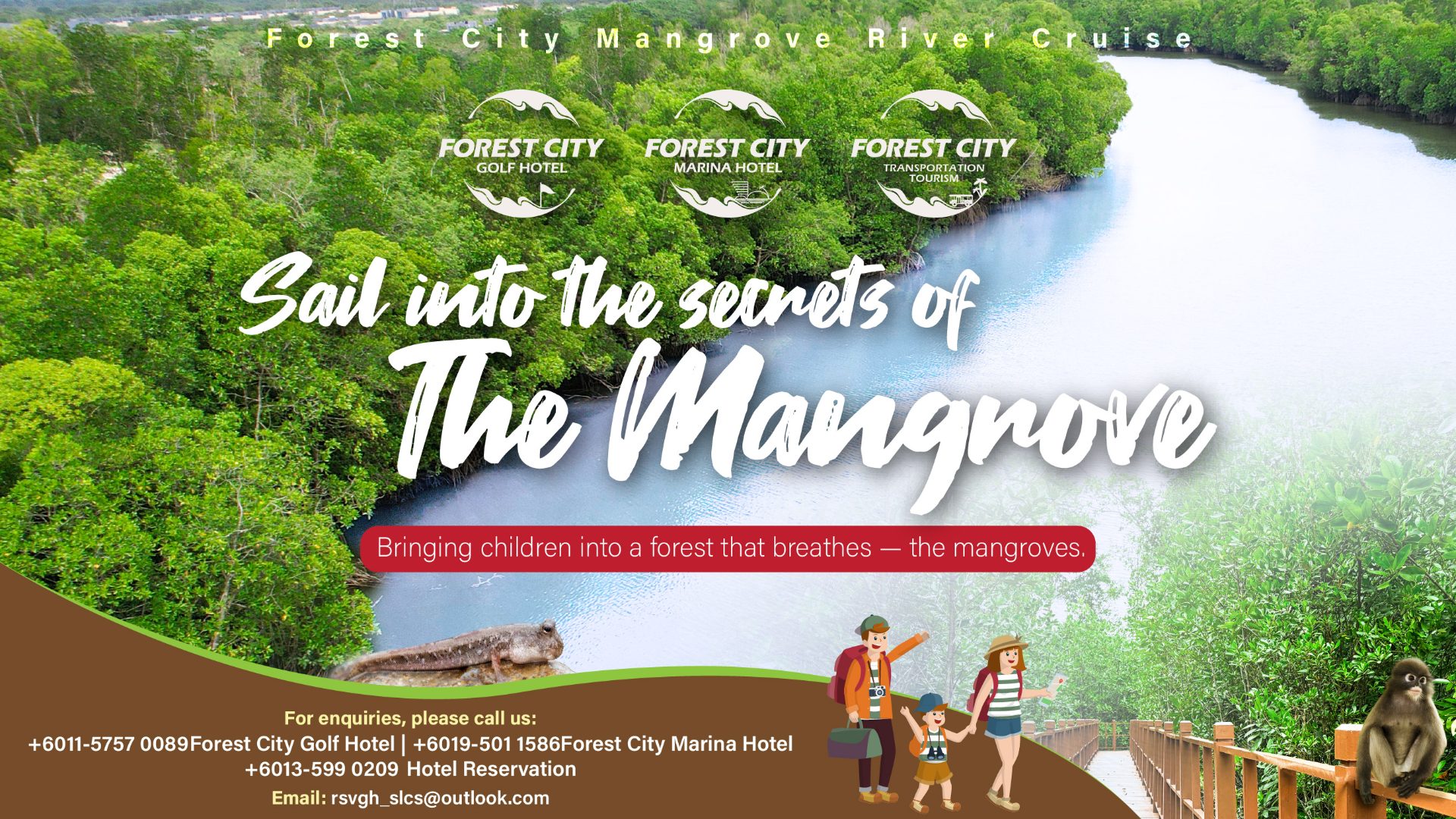
Beachcombing is about the shore at low tide. To see the mangroves, sign up for the Mangrove Eco Tour, which boards at the Forest City marina jetty.
It's free, but you need to register first. Departure times and meeting details are on the event page.
 Mangrove Eco Tour